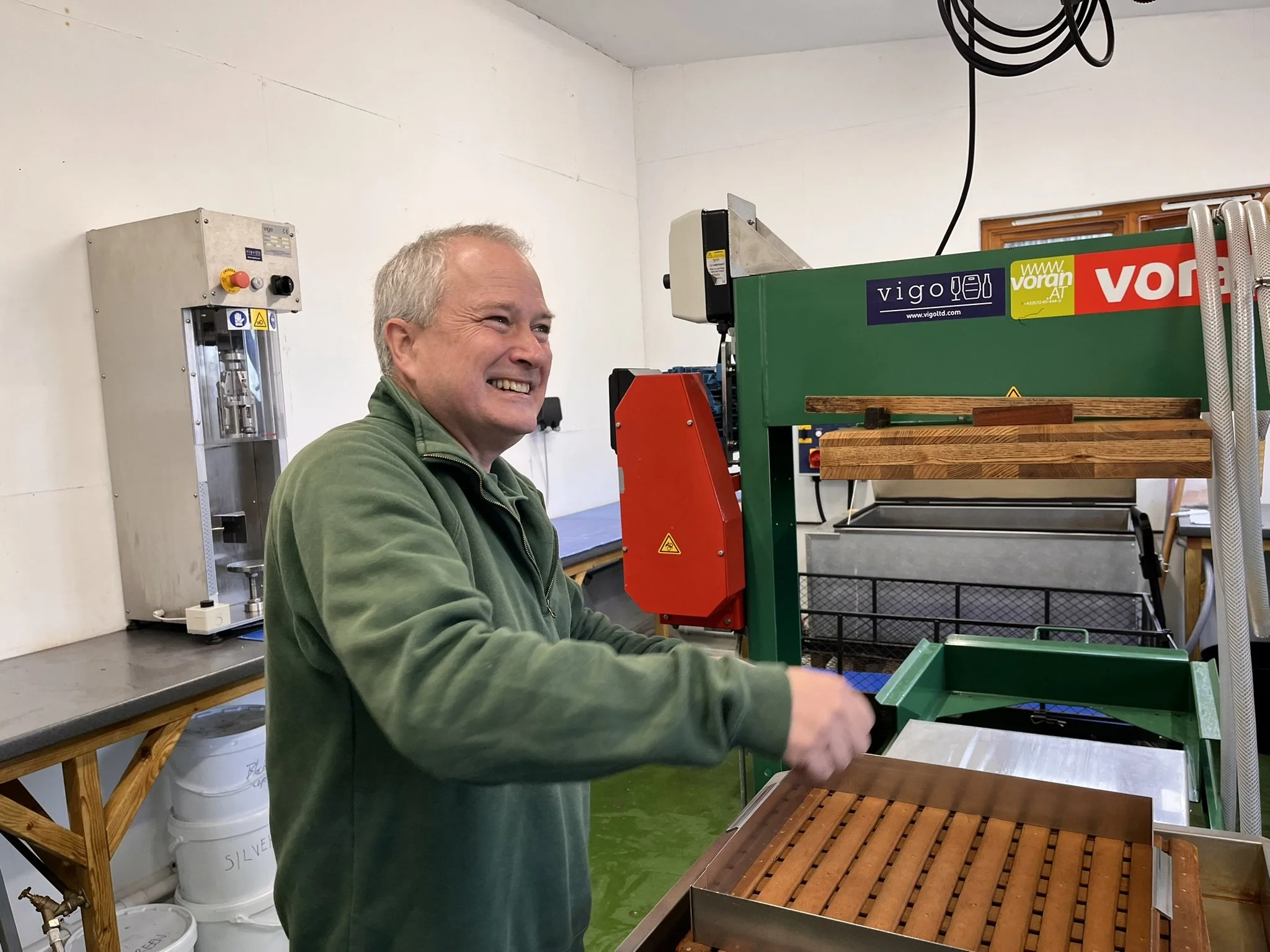
Chris showing us his apple pressing equipment
Yesterday we had a very enjoyable day on a cider-making course at Little Emlett Orchard, near Black Dog, right in the heart of Devon. Chris has lived there for over 20 years and established a very impressive orchard with a wide range of about 500 apple trees.
As Chris explained to us in the morning, one of the secrets of making delicious cider is to have a good mix of apples. This also increases the chance of having sufficient naturally occurring yeasts on the apples to start fermentation. It’s important to balance sweetness with acidity, ideally with some bitterness from cider apples. The higher the sugar content, the more alcoholic the cider will be. This can be estimated by measuring the specific gravity of the apple juice. The mix of apples we pressed yesterday afternoon yielded juice with a specific gravity of 1.064, which could produce cider with an alcohol content of around 8.4% once the sugar has fermented.
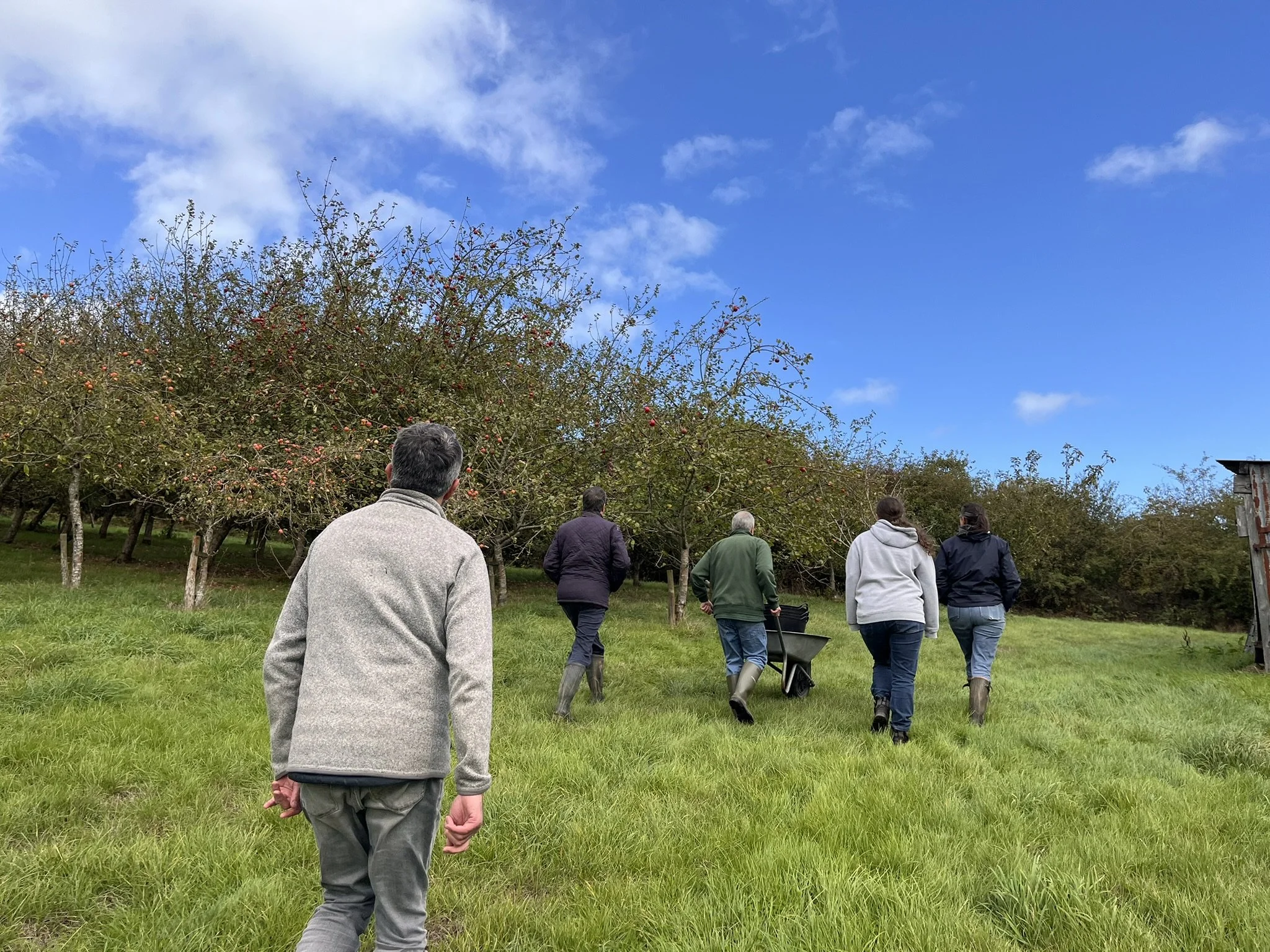
Collecting apples at Little Emlett orchard
It was great to hear about the theory of cider-making in the morning and then have a hands-on session after lunch. We gathered apples from the orchard, washed and milled them, and then pressed them using a Vigo apple press. It was fun doing this as a group, and we became much more efficient as the afternoon went on at layering the milled apples between cheesecloths and the wooden slats of the press.
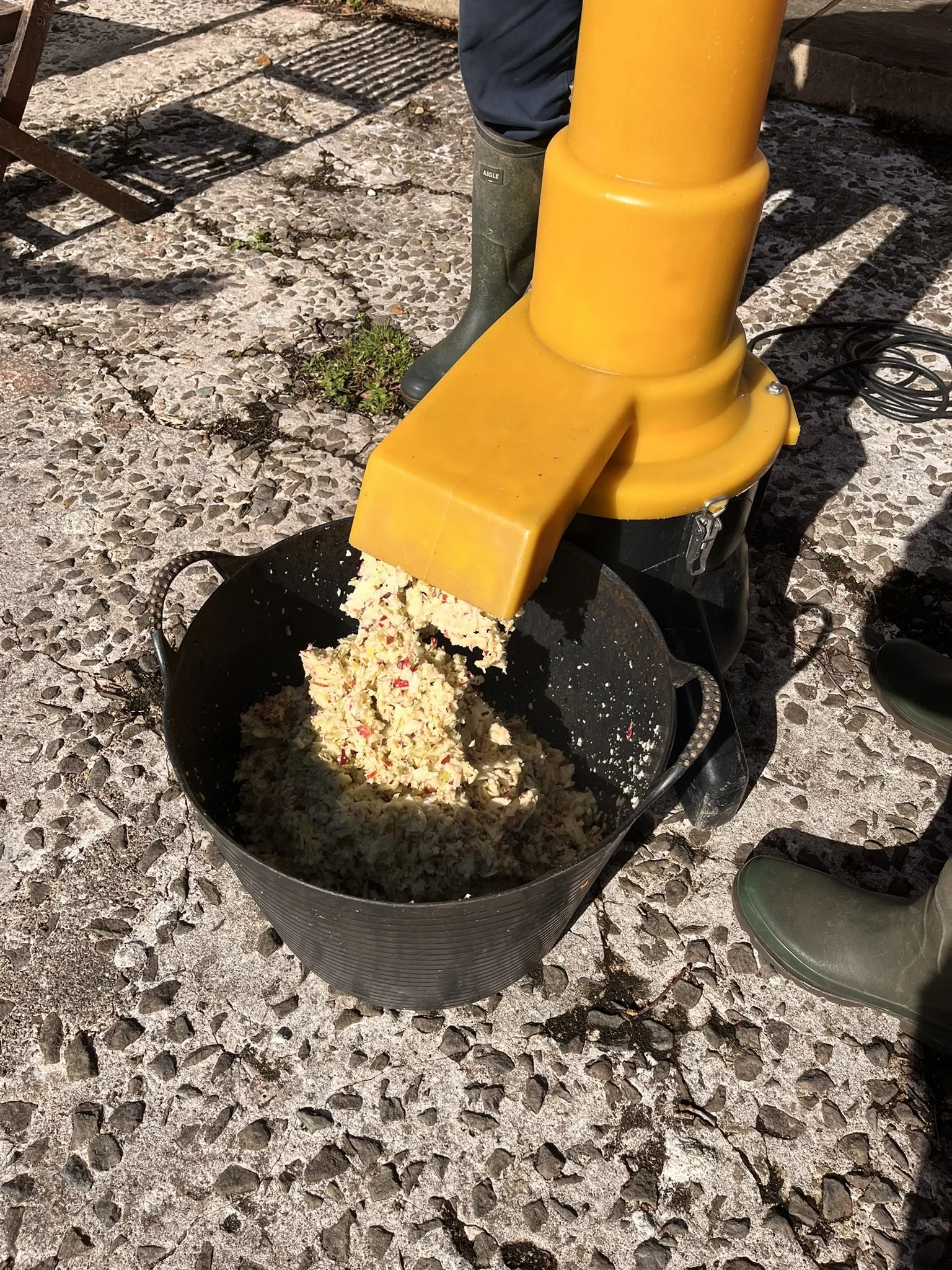
Apple milling
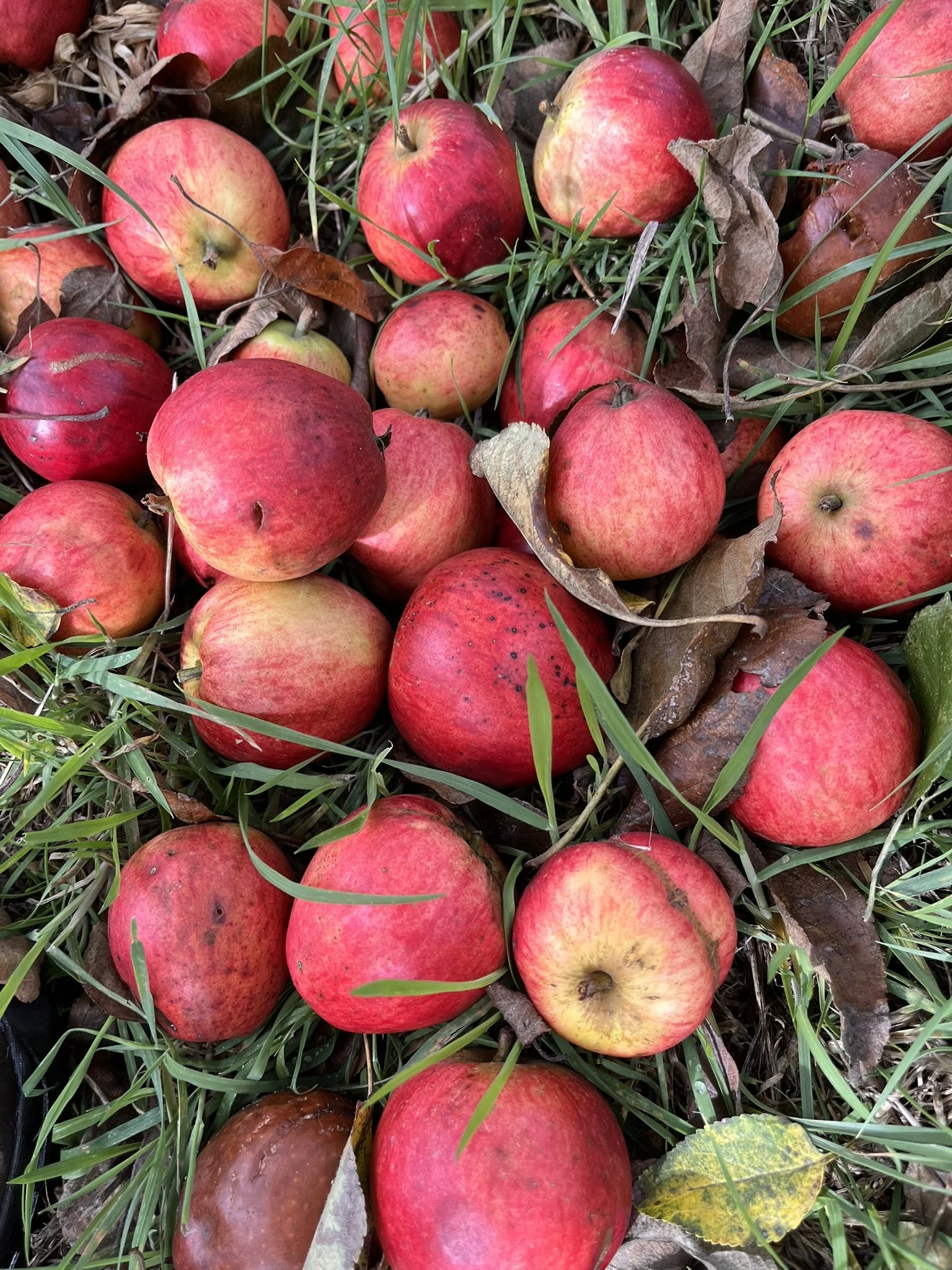
One of the key things I learned was that, whereas apple juice for drinking requires high-quality apples with very few bruises or blemishes, cider can be made with windfalls that aren’t perfect. It’s therefore a great way to make the best use of the apples in an orchard.
We left Little Emlett Orchard with forty-eight bottles of pasteurised apple juice that Chris had pressed for us during the week, plus two ten-litre containers of freshly pressed juice to ferment into cider. We’ll add cider yeast to one and leave the other to ferment naturally. It will be interesting to see how the two differ in quality.
Chris also gave us a handy tip: if home-brewed cider is a little too dry or acidic, adding a small amount of apple juice when serving can improve the taste.
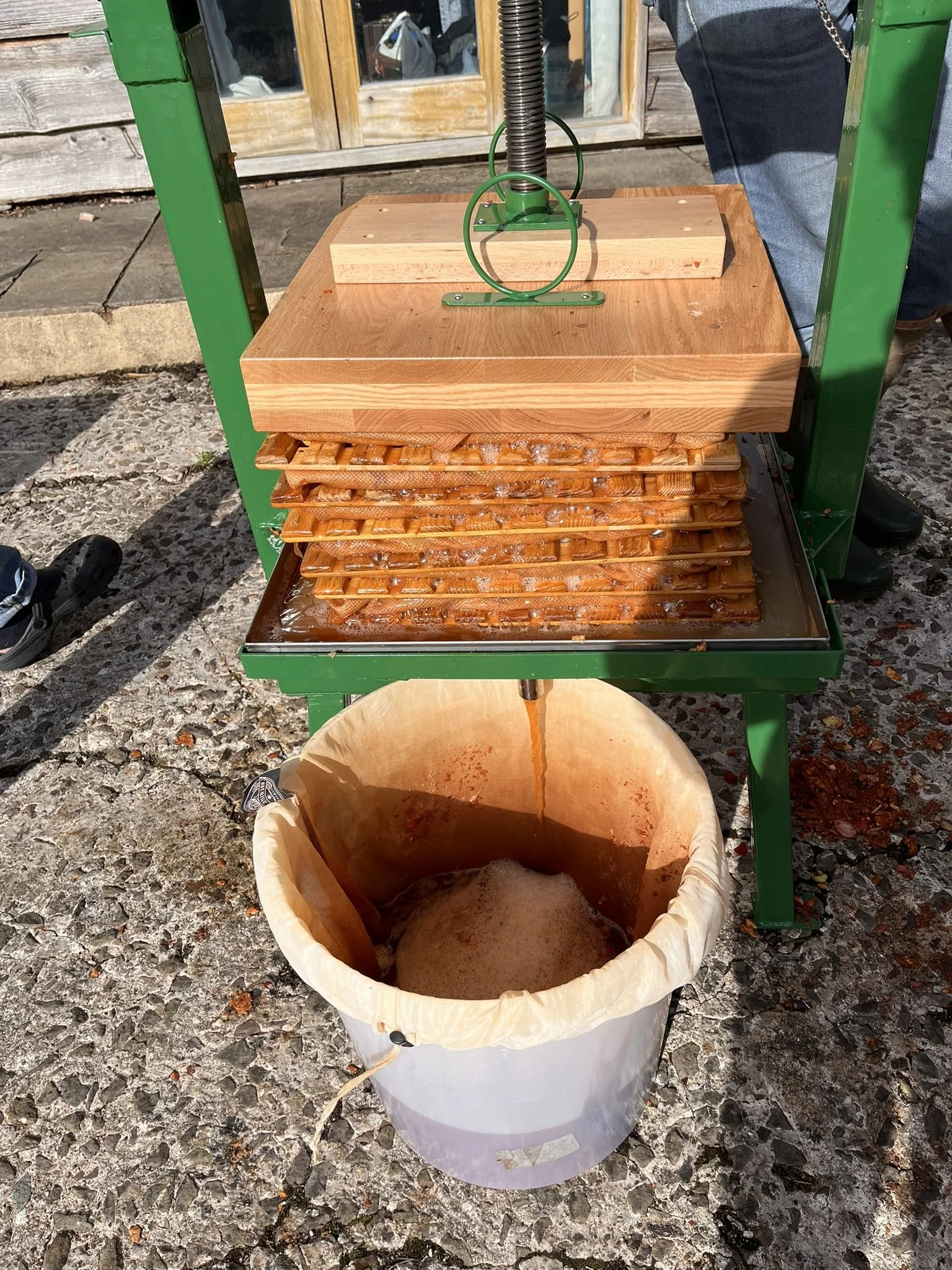
Pressing apples