free food

Spicy and spiky in West Devon: Growing Szechuan pepper

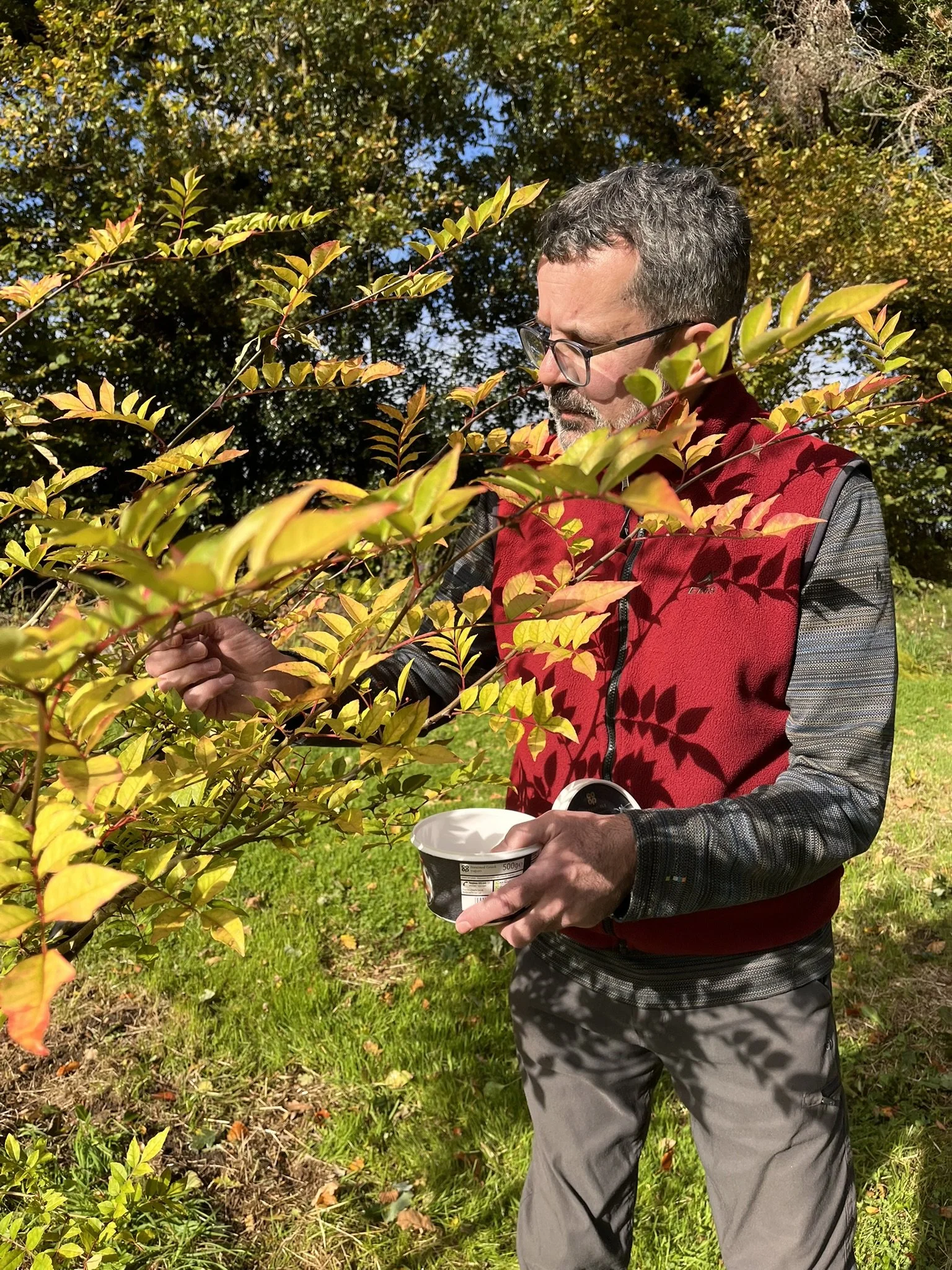
Our first attempt at growing Szechuan pepper in West Devon ended in failure. The plant we collected from a local nursery in 2019 never looked very healthy, and it failed to thrive. Undaunted, we tried again the following Autumn, this time buying a larger specimen online. It did better, though a few branches succumbed to squirrel damage despite its fearsome spikey thorns. Within a couple of years, our small tree at the end of the orchard was producing its first berries, and this year, for the first time, it has produced enough to fill a small jar.

Szechuan pepper (Zanthoxylum simulans) isn’t actually a pepper at all apparently, but the dried husk of a seed. It’s part of the citrus family and has a very specific flavour: lemony and  floral with a strange numbing sensation on the tongue.

There is something exciting about harvesting and drying your own pepper berries in the early autumn as the husks turn red and start to split. The smell as you harvest them is heady and truly unique, though so are those thorns. Szechuan berries never lose their intense aroma, but that aroma does soften a little as they dry, becoming less sharply citric.

Szechuan pepper is unusual in that when you dry the berries the aim is to throw away the seed kernel, which is unpleasantly bitter-tasting, keeping only the outer husk. This husk can be used whole, to add explosive texture to various Asian dishes, or ground into a powder to add the peppery heat typical of many dishes from western China (the dried husks can also be used to flavour salt). There are lots of recipes using Szechuan pepper in our favourite Chinese cook book by Fuchsia Dunlop ‘Every Grain of Rice’. We’ve loved the flavour of Szechuan pepper for years, but only recently discovered that the plant can thrive in Britain, even in the mild, wet winters of west Devon. Having a free draining soil and a sunny sheltered location is the key to success.

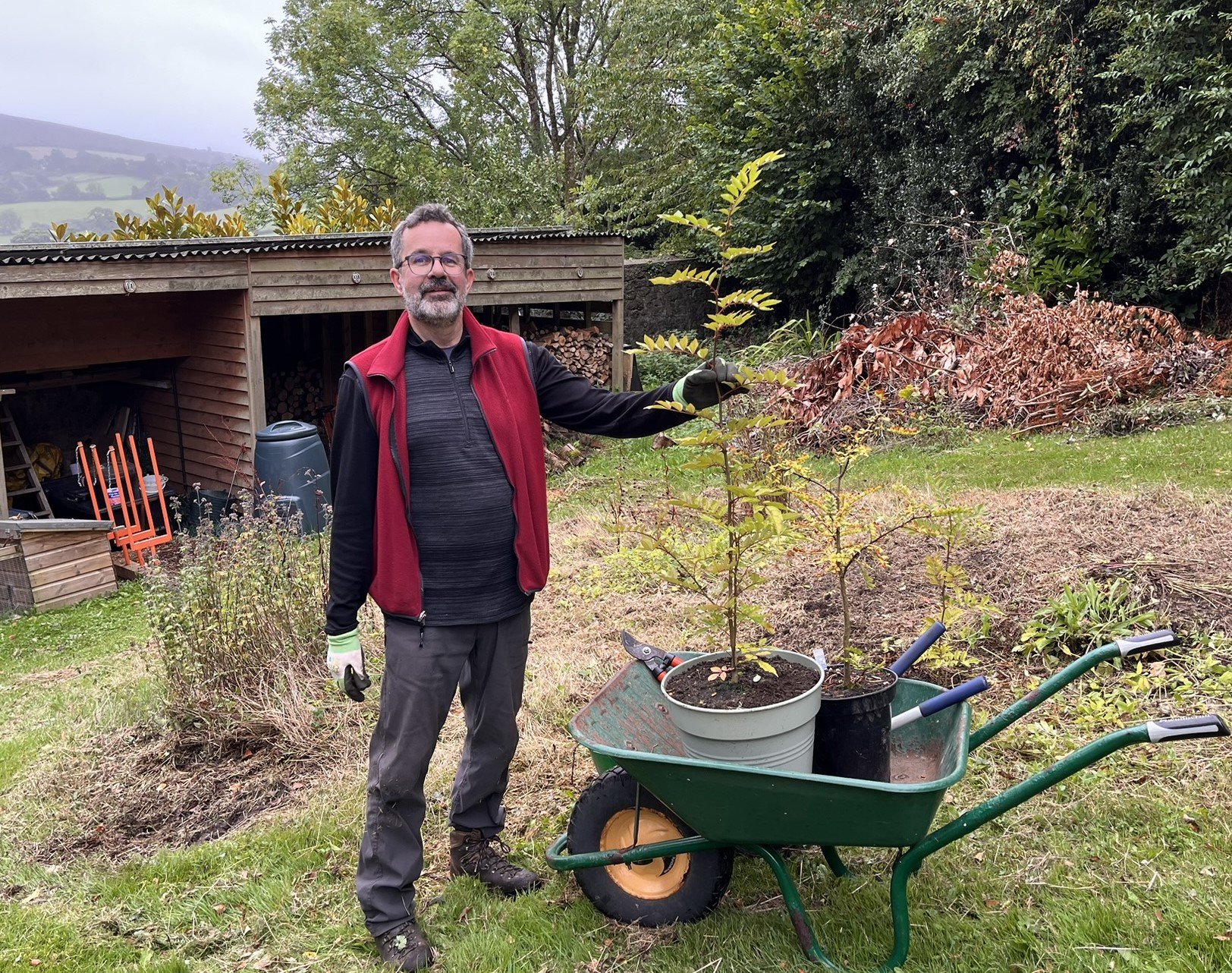
Even more excitingly, Jon has found that it is surprisingly easy to grow new Szechuan pepper plants from those discarded seed kernels. In 2022, he experimented with different ways to treat the seeds to aid germination: leaving them in lemon juice overnight (to mimic a bird’s acidic stomach) then putting them in the freezer for a week or so before potting in an unheated greenhouse to overwinter (Szechuan pepper seeds need frost to germinate). Jon grew on the resulting seedlings in pots for two years, repotting regularly through each growing season, and in October 2025 he planted the two strongest specimens near the original mother plant in the orchard. Hopefully in a few years these will also be providing us with generous crops of tangy berries.
Foraging for Chanterelles

This summer we passed the sixth anniversary of our move to West Devon, and by chance we marked that landmark by successfully foraging our first Chanterelle mushrooms. Following advice from some generous friends, we found a site on the edge of the moor that was particularly good for these lovely, bright-orange edible mushrooms. More remarkable was that once we had got our eye in, we started noticing them everywhere: on country lanes, in the atmospheric woods that grow all around us, and even in our own garden. We aren’t brave foragers, so before we took the plunge of eating them we spent a lot of time studying books and internet sites trying to learn how to distinguish true from false chanterelles. The latter won’t kill you, but apparently, they can cause a significant upset stomach if eaten in error.

Chanterelles growing near the moor in mossy grass and under the canopy of an old beech

So far, so good – through late August and September we had a series of lovely meals enhanced by these beautiful, curly-edged delicacies. When we find them growing, usually in moss or leaf-mould close by an established beech or oak, we always try to leave more than half the clump for nature/others. We also try not to pick them when they are still small, although this does often mean accepting that someone else will have harvested them before we return. On one occasion, we found that all the mushrooms in an especially good patch had been cut to the ground with a sharp knife overnight (we generally harvest by hand ourselves and then trim the muddy base).

Just-picked chanterelles with their mudddy bases

A typical location for chanterelles on the edge of the moor

To our amazement, in early September we even found Chanterelles growing on the path from our house to the outdoor firepit – they really have been everywhere this year. Perhaps the wet summer helped. Or perhaps they were always there but we just didn’t notice or didn’t realise what they were. As with any mushroom, tuning in to its habitat, and learning how to distinguish it from other (potentially poisonous) mushrooms is the key with Chanterelles.

Our trusted guide - complete with Chanterelles on the cover

We have always found the Collin’s guide How to Identify Edible Mushrooms, by Patrick Harding, Tony Lyon and Gill Tomblin to be particularly clear and helpful. Now out of print, the slim 1996 paperback edition is widely available second-hand and generally cheaper than the 2007 reprint. There are also many good mushroom ID phone apps available, although the best require a subscription (this is a financial commitment we have resisted, thus far, so we cannot make recommendations).  Guides are full of various tips for identifying true chanterelles from their inedible cousins, but the key distinguishing feature is the nature of the gill pattern beneath the cap. Unlike false chanterelles, which have ‘true’ gills very like a field or portobello mushroom (i.e. gills that run straight from the outer rim to the central stem), the edible chanterelle has a criss-crossing, lattice-patterned under-side where many of the gill-like threads interconnect.

The underside of a true chanterelle showing its criss-crossed pattern of pseudo gills

Guide-books also claim that edible chanterelles smell fruity, with a hint of apricot, that their stems are more solid and narrow towards the base, and that their cap is chunkier with a more crenulated margin. But we have not found any of these indicators to be as unambiguous as the gill pattern.

Chanterelles picked and waiting to be cleaned

Finally, how should one prepare and cook chanterelles? Cleaning the mushrooms can be fiddly, especially if you haven’t cut the muddy bases off when collecting. It is best not to wet the mushrooms – we tend to use a small dry brush and a lightly dampened cloth or kitchen towel. Getting dirt from between the gills may require a sharp point such as a pen knife blade. Once clean and dry, chanterelles can be used as any mushroom. They are great in omelettes or fried in butter with parsley and garlic and then used as a garnish on a dish such as a creamy risotto. If you have enough, why not just serve them on slices of buttered sourdough toast, or use them in a cream sauce to accompany a light meat like chicken or guinea fowl. Happy foraging—and feasting.

Chanterelles served with mushroom risotto, pigeon breast and braised fig with a crispy sage garnish